What Makes a Great Sci-Fi Game World?
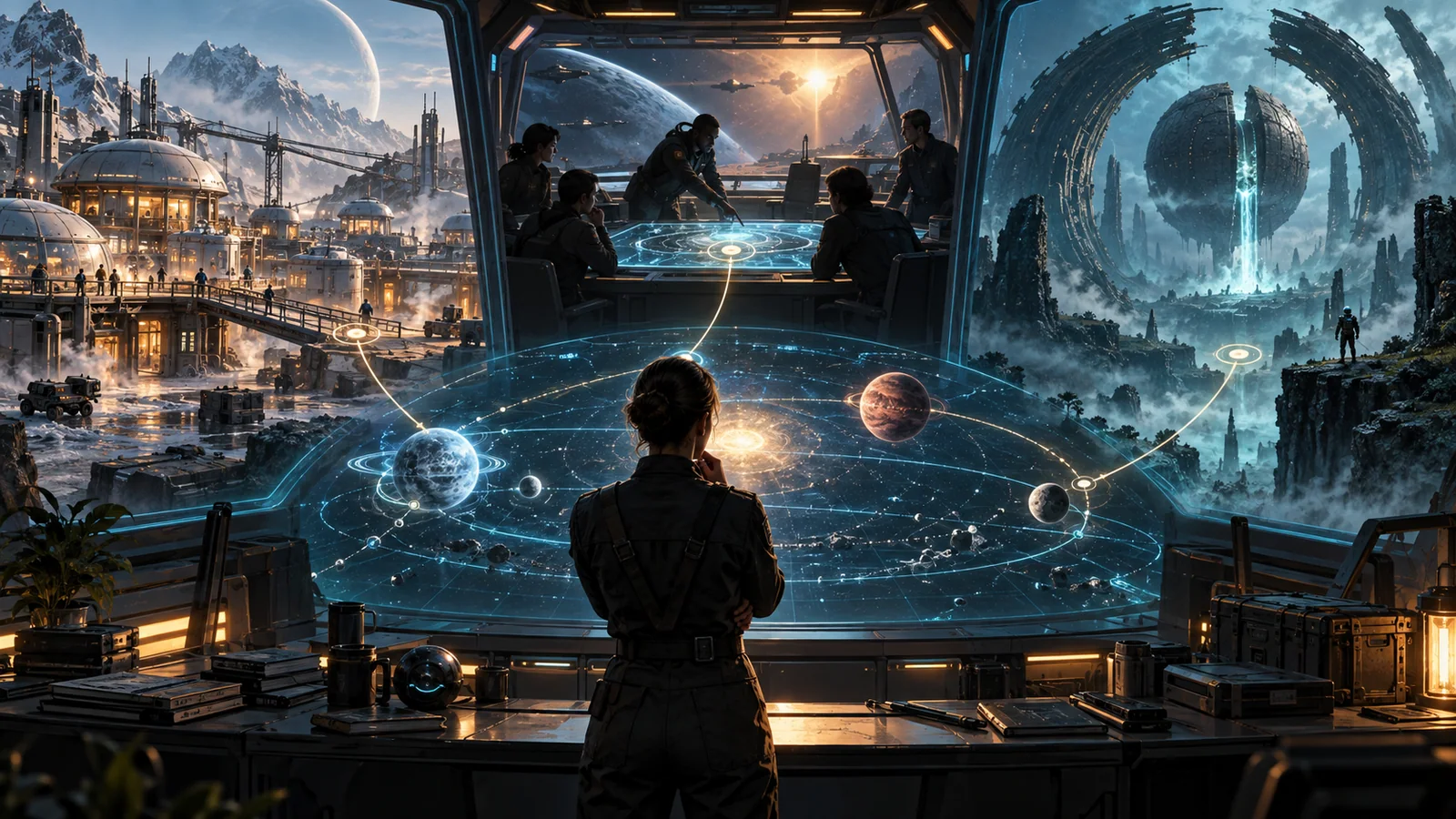
A sky full of ships does not automatically create a convincing future. Great sci-fi game worlds feel coherent because their technologies, places, institutions, and conflicts affect what the player actually does.
1. Technology has consequences
The strongest speculative tool changes more than combat. Cheap cloning should affect law and identity. Faster-than-light travel should reshape borders and trade. Cybernetic labor should change class and medicine. Technology becomes worldbuilding when society has adapted to it.
2. Places reveal their purpose
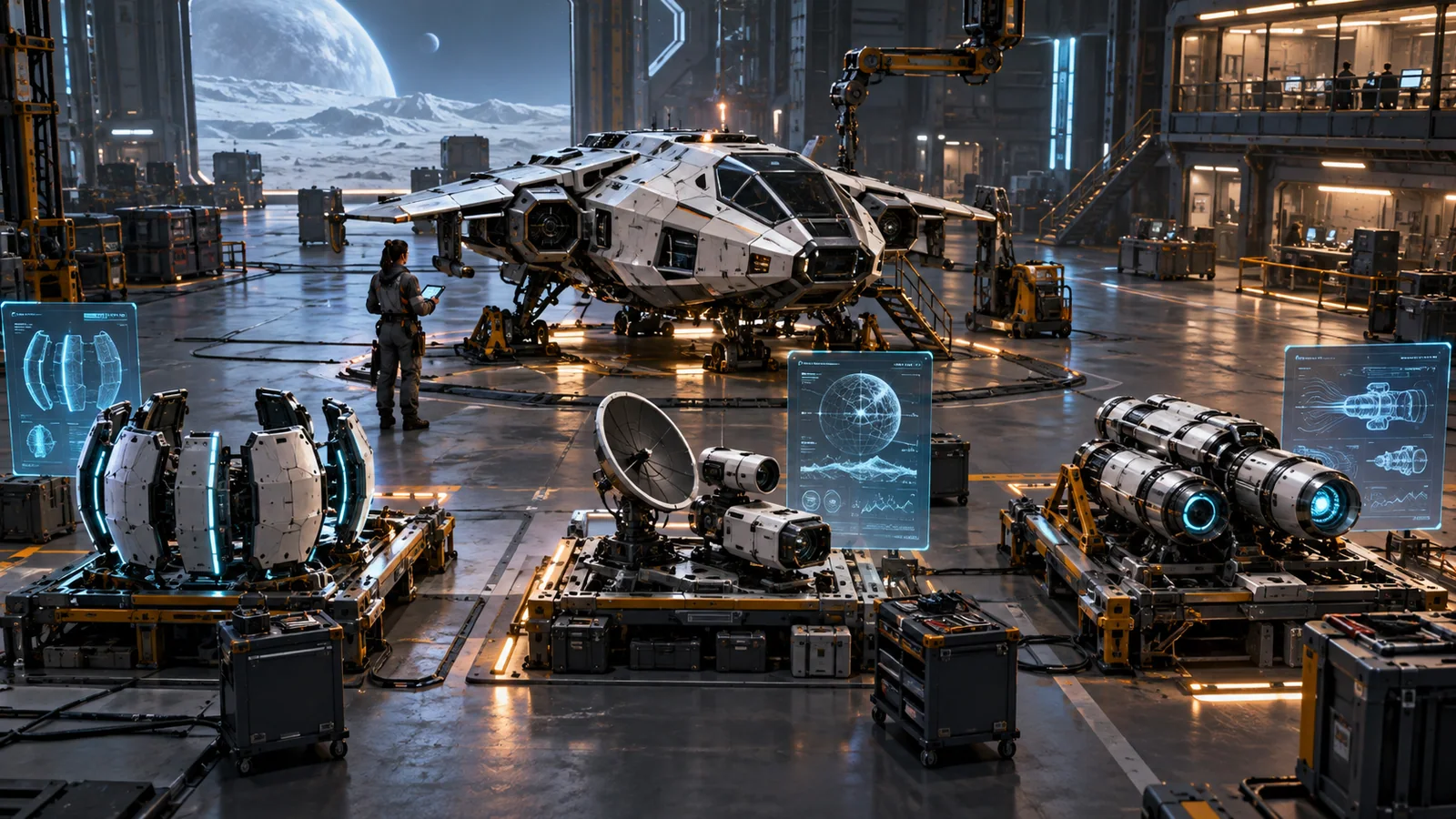
A research station, mining moon, and generation ship should not share the same visual grammar. Routes, machinery, living space, and damage tell the player what a place produces, who controls it, and what went wrong before the exposition arrives.
3. Factions want incompatible futures
Good factions are not color-coded teams. Each should have a credible answer to scarcity, security, discovery, or survival, plus a cost it would rather ignore. Conflict becomes interesting when the player understands why reasonable people might choose opposing sides.
4. Systems support the fiction
If fuel is supposedly scarce, navigation and mission planning should make fuel matter. If artificial intelligence is feared, software access and dialogue should reflect that tension. Mechanics do not need to simulate everything, but they should reinforce the world’s central claims.
5. Player choices leave evidence
Consequences need not rewrite an entire galaxy. A changed patrol route, repaired habitat, absent merchant, or companion response can prove that the world noticed. Small persistent evidence often feels more convincing than a cinematic promise of enormous impact.
A practical worldbuilding test
Choose one technology and trace it through five questions: who owns it, who repairs it, who cannot access it, which law governs it, and what the player can do with it. If the answers connect to places and mechanics already in the game, the setting is becoming a playable world.
Visual scale attracts attention. Causal consistency earns belief.
Sources
sci-fi gamesworldbuildinggame designscience fiction