How to Compare Sci-Fi Games in 2026
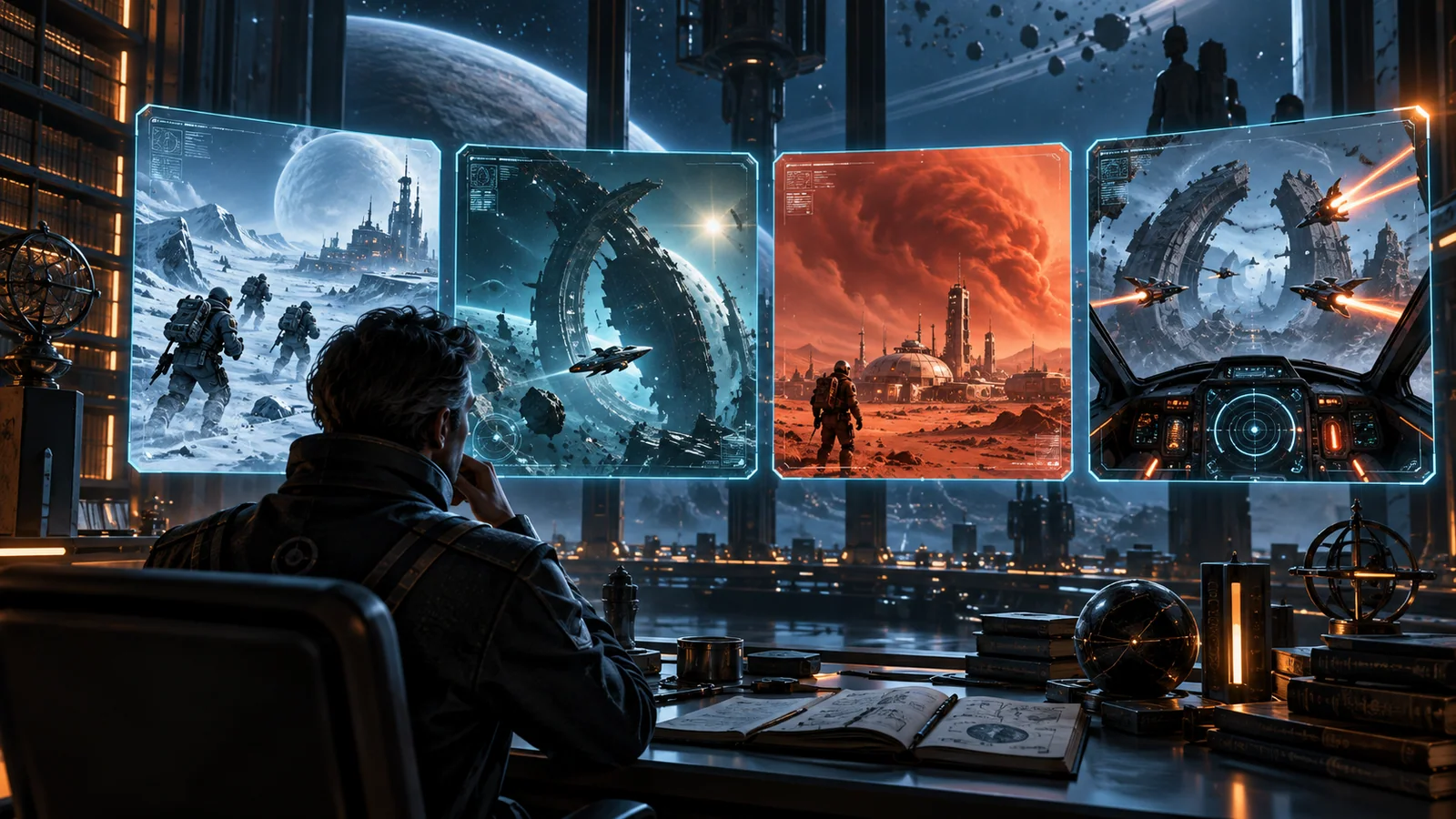
Science fiction is a setting, not a play style. Two games can share an ice moon and ask for completely different skills.
Start by identifying the player’s role. Are you a squad leader making short tactical commitments, a captain coordinating a crew, a colony planner managing compounding systems, or an explorer interpreting an unknown world? The role predicts the decisions better than the visual theme.
Use five comparison questions
- What repeats? Name the core loop in one sentence.
- What changes because of the player? Look for world response, not only progression numbers.
- Where does uncertainty come from? Good uncertainty creates planning; hidden rules create guessing.
- What exists now? Separate the installed build from a roadmap.
- Does it fit the machine and player? Verify platform, input, accessibility, account, and performance requirements.
Use current official store pages for product identity and requirements. Use dated release notes for features. Use a demo or owned build for control and performance observations. A trailer can establish tone, but it cannot prove depth or stability.
Publish recommendations for a named player: the systems-focused commander, the story explorer, the co-op crew, or the survival optimizer. “Best” without a use case is mostly marketing.
Cryohelm comparison framework updated 9 September 2026.
sci-fi games2026 gamesbuying guidecomparison